Your Body Knows The Way: Kinesiology Explained
When I first discovered kinesiology, I thought it was the bee’s knees. I still do.
It’s one of those modalities that feels almost magical while still being grounded, practical, and deeply connected to the body’s wisdom.
And yet… not many people know what it is.
I think that’s partly because the name creates confusion. Is it movement therapy? Energy work? Some kind of massage? A hybrid?
So I wanted to create a clear, grounded explanation of what kinesiology actually is, how it works, and what it can support in your life. Here goes and enjoy!
What exactly is kinesiology?
Kinesiology is a holistic, body-based modality that draws from:
Eastern energetic systems (like meridians and chakras)
Western anatomy, physiology and neurology
A deep respect for the body’s innate ability to restore balance
It originally evolved from the medical study of human movement, which is where the confusion often comes in. The kinesiology I practice, NeuroEnergetic Kinesiology (NK), is not physiotherapy or movement rehabilitation. Instead, it works with the body’s electrical, emotional and energetic patterns.
Kinesiology developed from the medical model where it is defined as the study of human movement. There can often be some confusion here as people expect the kinesiology I practice to be similar to physical therapy, which isn’t the case.
The core of kinesiology? Muscle response testing (or monitoring).
Your muscles are connected to your brain and nervous system.
By gently applying light pressure to specific muscles (usually the arms or legs), your body gives immediate feedback about:
Where you’re carrying stress
What’s overloading your system
What needs support
What will help restore flow and balance
This is a direct line of communication with your body—one that bypasses guessing, overthinking and story, and goes straight to the underlying stress patterns.
So, what happens after we identify stress?
Once we understand what your system is holding, we use techniques that help defuse stress and restore flow.
Every session is different because every body is different.
Depending on what comes up, we may use:
Gentle acupressure
Talk therapy or reflective dialogue
Sound therapy (tuning forks)
Light therapy
Affirmations
Guided awareness
Flower essence or essential oils
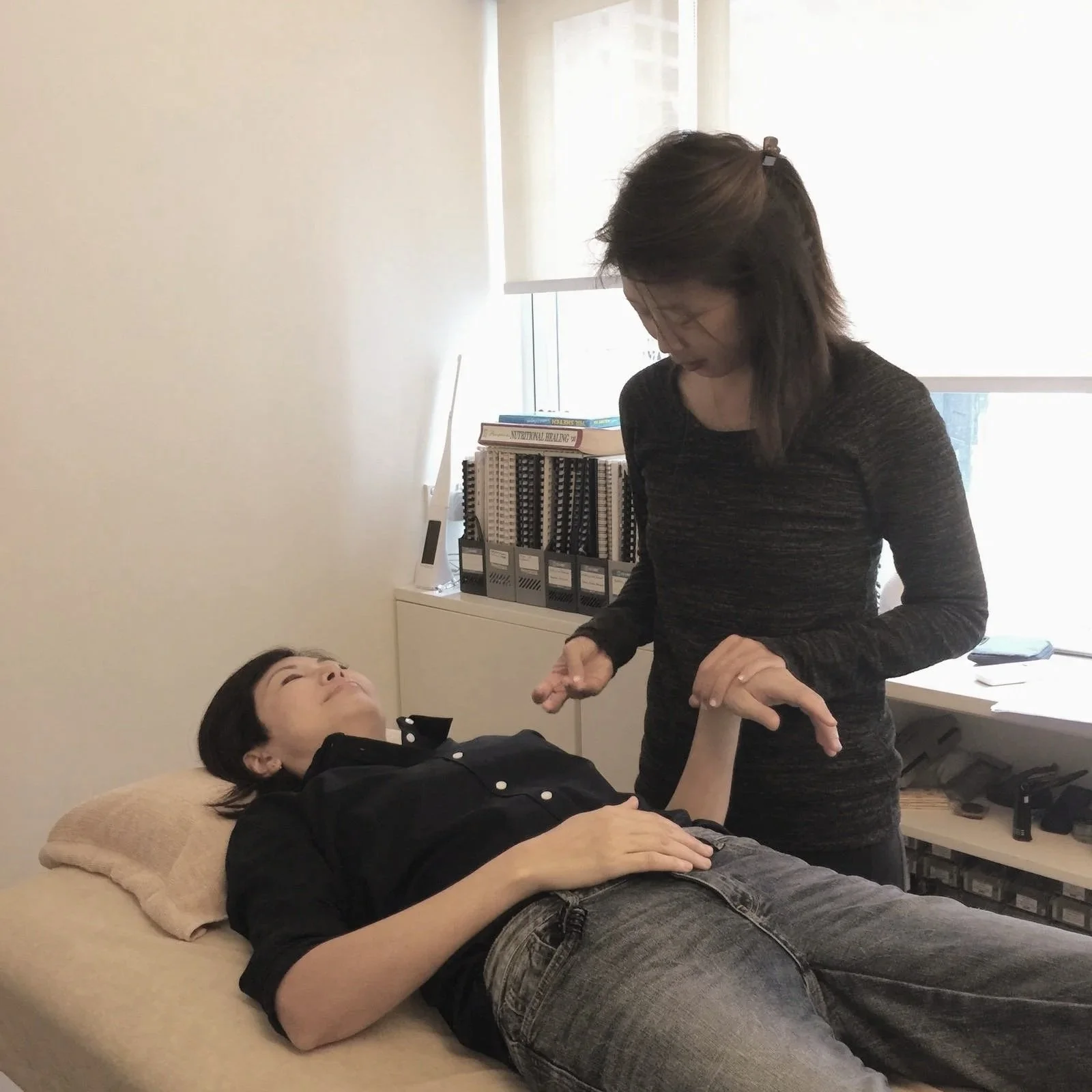
I work intuitively and collaboratively, always guided by your system, never forcing or imposing an agenda.
Some sessions feel spacious and grounding.
Others bring forward emotions, insights or long-held tension that finally has room to move.
Crying, laughing, releasing, feeling…it all belongs.
Kinesiology isn’t about forcing calm or relaxation. It’s about giving your system the support it needs so that whatever has been held can gently come to the surface in its own timing.
People often leave feeling clearer, lighter or more connected, but every session is unique, because every body communicates differently.
How can kinesiology support you?
Here are some of the ways kinesiology can meet you and support your system:
Brings gentle awareness to patterns or themes that may be shaping your well-being
Offers a clear mirror for understanding what’s underneath your reactions, stresses or emotional loops
Helps you soften or release old patterns that no longer serve you
Creates more space for ease, clarity and contentment in your daily life
Supports you in reconnecting with your inner direction or purpose
Helps you show up more fully in your own life, with more capacity to feel, choose and move forward
Wait…does this only happen in person?
Kinesiology can also be done online. Not all kinesiologists offer this but many do!
I offer remote sessions via Zoom, which work best for clients who feel comfortable communicating in English and engaging verbally. The depth and impact are the same as in-person sessions.
Are there different types of kinesiology?
Yes. The modality I practice is NeuroEnergetic Kinesiology (NK), developed by Hugo Tobar.
NK is known for:
its depth
its comprehensive maps of the nervous system
its ability to access subtle energetic structures (chakras, meridians, nadis, pathways)
its detailed understanding of physiology and neurology
It’s an incredibly rich system that allows us to work with patterns held physically, emotionally, or energetically. You can learn more about it here.
How can kinesiology support you?
Kinesiology doesn’t diagnose or treat illness.
It works by reducing stress patterns, supporting your system, and creating more capacity for your body to do what it naturally knows how to do.
People often come to kinesiology when they’re experiencing things like:
Emotional or mental load
anxiety or overwhelm
looping thoughts
difficulty focusing
feeling stuck or disconnected
burnout or emotional fatigue
Rest + regulation
challenges with sleep or rest
feeling “on edge” or overstimulated
difficulty slowing down
Physical experiences influenced by stress
pain or tension
digestive or hormonal shifts
skin flare-ups
low resilience
Life transitions
grief
identity shifts
self-doubt
moving through big change
Personal growth & clarity
understanding yourself more deeply
reconnecting with your inner world
finding direction or alignment
supporting creativity and ease
Instead of forcing “calm” or pushing toward relief, kinesiology helps give your body more capacity, clarity, and connection.

What makes kinesiology so effective?
Because we’re not guessing. We’re asking your body directly.
And your body always communicates honestly.
(Which is why I like to call it a type of “smart” energy healing.)
Stress patterns that you might not consciously register often show up clearly through muscle response monitoring, giving us information your mind that may not have been in our conscious awareness.
This clarity alone can be incredibly relieving.
Kinesiology isn’t…
a replacement for medical treatment
a diagnostic tool
a quick fix
It’s a way of:
listening to your body
supporting your system
releasing stress
increasing capacity
reconnecting with yourself
It works beautifully alongside other forms of support, whether it’s therapy, osteopathy, or other types of body work, physiotherapy, coaching or medical care.
Curious to experience it?
If you’d like to explore kinesiology for yourself, you’re welcome to:
Book a kinesiology session with me here in Eindhoven
Schedule a free 15-minute call to ask questions
Your body already knows the way.
Kinesiology simply helps translate what it’s trying to tell you.

Hello there,
I’m Lia, and I’m dedicated to helping humans move through life with more capacity, clarity and connection. As a kinesiologist, I’m here to help you uncover blocks and let go of limiting beliefs that are no longer serving you. If this resonates, I invite you to reach out to book a session with me in person in Eindhoven or online, learn more about kinesiology here. xx